
CONCRETE AND BRICK PAVER INSTALLATION IN PORTLAND, OREGON
Your concrete is cracking. Pavers won't.Why Portland Homeowners Choose Pavers Over Poured Concrete
Poured concrete is the default for most patios and walkways in the Portland metro, but it has a fundamental problem in this climate. Portland’s freeze-thaw cycles, where temperatures drop below freezing in winter and then warm back up repeatedly, cause concrete slabs to crack over time. Water seeps into the cracks, freezes, expands, and makes the damage worse each season. Within 10 to 15 years, most poured concrete patios in the Portland area show visible cracking, spalling, or settling.
Pavers handle this differently. Because each paver is an individual unit set on a compacted sand-and-gravel base, the surface flexes with ground movement instead of cracking. If a single paver does crack or settle, it can be pulled up and replaced without tearing out the entire surface. That’s why pavers consistently outlast poured concrete in climates like Portland’s, where the ground moves seasonally.
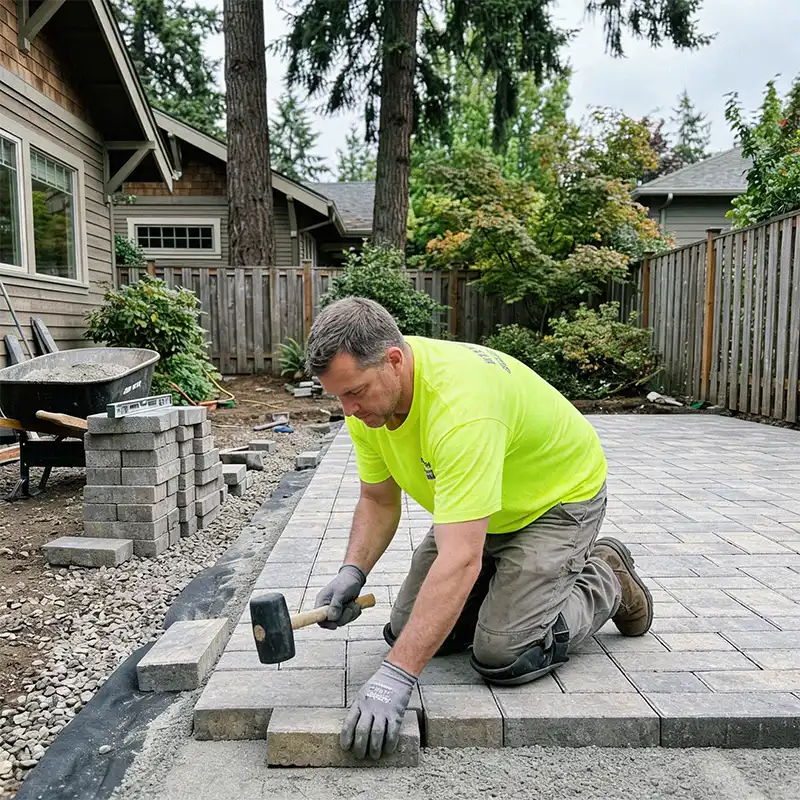
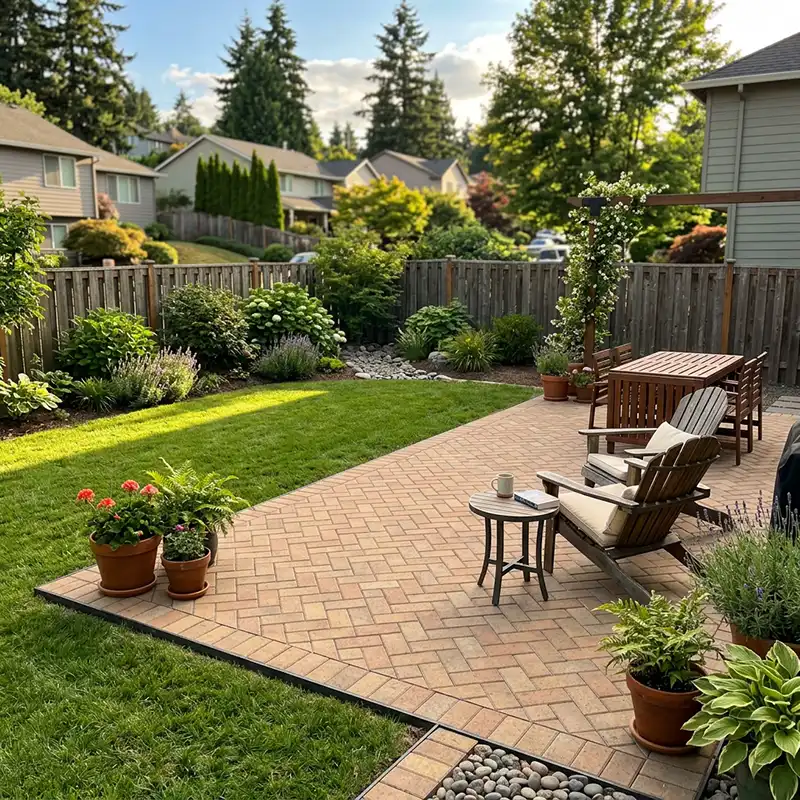
Pavers also give you design flexibility that concrete can’t match. Concrete, brick, natural stone, and permeable paver options come in a wide range of colors, textures, patterns, and shapes. A herringbone brick patio looks completely different from a flagstone walkway or a modern large-format concrete paver driveway. Properties in neighborhoods like Eastmoreland, Dunthorpe, and Lake Oswego often use natural stone pavers to match the character of the home, while newer builds in Happy Valley and Damascus tend toward clean-lined concrete pavers with a contemporary look.
The City of Portland’s permitting requirements for paver work vary by scope: a standard patio on grade typically doesn’t require a building permit, but driveway work involving a new or modified curb cut does require a zoning permit. We identify any permit needs during the site evaluation and handle the process as part of the project.
Monaghan’s Landscaping has been installing concrete, brick, and natural stone pavers throughout Multnomah, Clackamas, and Washington Counties since 1987. Every installation starts with a properly excavated and compacted aggregate base designed for Portland’s clay soil and seasonal moisture.
Your written estimate specifies the paver product, base material and depth, edge restraint type, joint sand, and drainage plan, because the base is what determines whether pavers stay level or settle within a few years, and you deserve to see every detail before we break ground.
If you’re considering a paver patio, walkway, or driveway, call (503) 847-9110 to schedule a free consultation, or request a free quote online.
See What Your Neighbors Are Saying
Our Paver Installation Process
Every paver installation follows a structured process designed to get the job right the first time. Here's what to expect when you work with Monaghan's.
Contact Us for a Free Quote
Call (503) 847-9110 or fill out our short quote request form. We'll schedule a convenient time to visit your property and assess the project.
On-Site Consultation and Design
We walk the property to measure the project area, evaluate the existing grade and drainage, check soil conditions, assess access for equipment, and discuss your goals for the space. This is where we recommend paver materials, patterns, and design features based on the intended use, whether that's a patio for entertaining, a walkway connecting outdoor areas, or a driveway built for vehicle loads.
Written Estimate
You'll receive a detailed, written estimate with line-item pricing covering demolition and removal of existing surfaces (if applicable), excavation depth, aggregate base material and depth, geotextile fabric, bedding sand, edge restraint type, paver product by name, color, and pattern, polymeric joint sand, and labor. You'll see exactly where every dollar goes. Compare it to any other estimate you've received.
Excavation and Base Preparation
We excavate to the required depth, typically 8 to 12 inches for patios and walkways and deeper for driveways that need to support vehicle loads. On Portland's clay soil, proper excavation depth is critical because clay holds moisture and shifts seasonally. We install geotextile fabric to separate the base from the subgrade, then lay and compact crushed aggregate in lifts using a plate compactor to create a stable, level foundation.
Edge Restraints and Bedding Sand
We install aluminum or plastic edge restraints anchored with spikes to define the perimeter and prevent pavers from shifting outward over time. A uniform layer of bedding sand is then screeded across the compacted base to create the setting surface. The sand layer is leveled precisely because any variation here shows up as an uneven surface in the finished installation.
Paver Placement and Cutting
We lay pavers in the selected pattern, working from one corner outward to maintain consistent joint spacing. Pavers along edges, curves, and around obstacles are cut with a diamond-blade wet saw for clean, precise fits. For driveways, we use a herringbone or interlocking pattern that distributes vehicle loads evenly and resists shifting under tire traffic.
Compaction, Joint Sand, and Final Inspection
The entire surface is compacted with a plate compactor (using a protective pad to prevent scuffing) to seat the pavers into the bedding sand. Polymeric sand is swept into the joints and activated with water, hardening to lock pavers in place and resist weed growth, ant intrusion, and washout. We inspect every edge, joint, and transition, verify drainage performance, and walk the finished project with you. Backed by our 3-year workmanship warranty, in writing, before work begins.
Every paver project depends on what's underneath. Let us evaluate your soil, drainage, and grade and build a base that won't settle.
Call (503) 847-9110 Get Your Free EstimateMost consultations are booked within a few days of your request.
Paver Types and Materials for Portland Properties
The right paver material depends on the project’s function, your home’s style, and how the surface needs to perform in Portland’s wet climate and freeze-thaw cycles. Here’s an overview of what we install.
Concrete Pavers
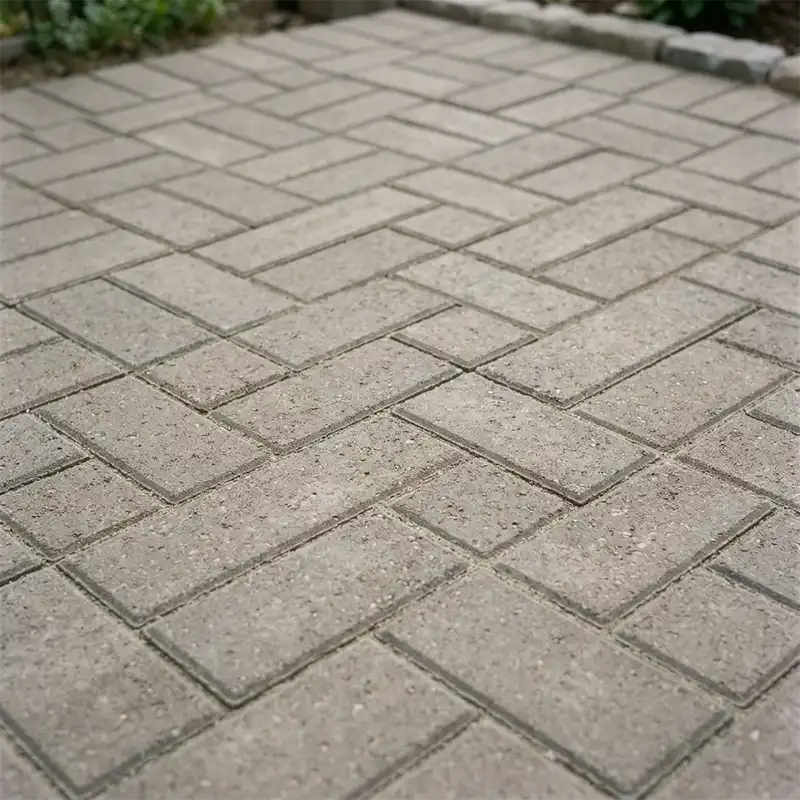
Concrete pavers are the most popular choice for residential patios, walkways, and driveways in the Portland metro. They’re manufactured in a wide range of shapes, sizes, colors, and textures, from smooth modern slabs to tumbled old-world styles. Concrete pavers are strong enough for driveway loads when installed on a proper structural base, and they hold up well in Portland’s freeze-thaw cycles because the individual units flex with ground movement instead of cracking like a poured slab. They’re also the most cost-effective paver option per square foot.
Clay Brick Pavers
Clay brick pavers offer a classic, warm aesthetic that complements Portland’s older Craftsman and Colonial-style homes. They’re fired at high temperatures, which makes them extremely durable and resistant to fading. Unlike concrete pavers that can lose surface color over decades, clay brick holds its color permanently because the pigment runs through the entire unit. Brick is a natural fit for properties in neighborhoods like Laurelhurst, Alameda, and Eastmoreland where the architecture calls for traditional materials.
Natural Stone Pavers
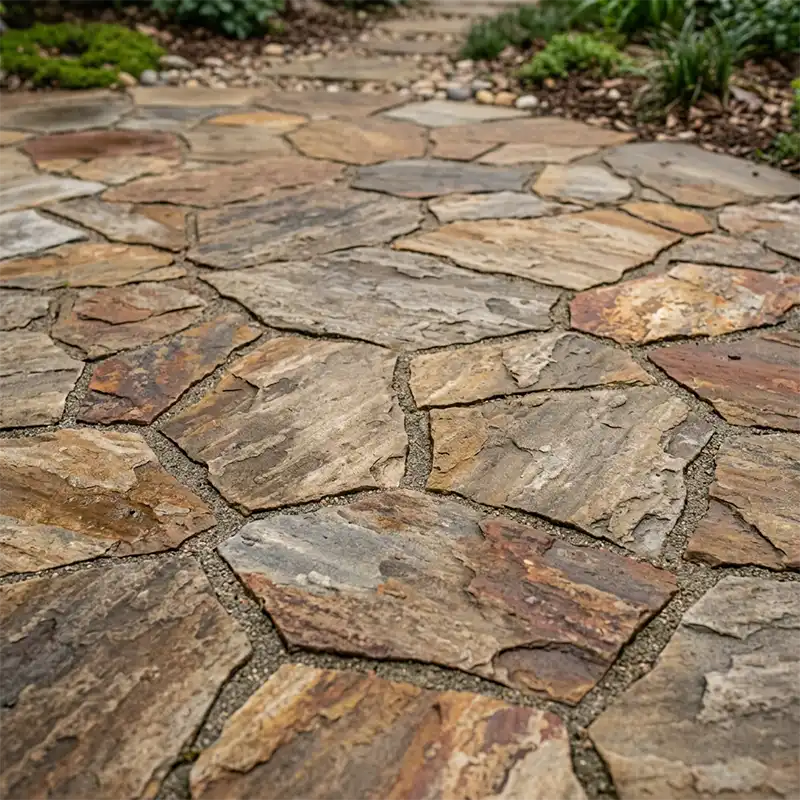
Natural stone options include flagstone, bluestone, basalt, and granite. Each has a unique texture, color variation, and character that manufactured products can’t replicate. Flagstone is popular for patios and garden paths where an organic, irregular look fits the landscape. Bluestone offers a more uniform, refined appearance for formal patios and entryways. Properties in Lake Oswego, Dunthorpe, and the West Hills often use natural stone to complement high-end architecture and mature landscaping. Natural stone costs more per square foot than concrete or brick but delivers a premium aesthetic and exceptional longevity.
Permeable Pavers
Permeable pavers are designed with wider joints or porous material that allows rainwater to drain through the surface into a gravel reservoir below, reducing stormwater runoff.
In Portland, where managing stormwater is both an environmental priority and a regulatory consideration, permeable pavers can help properties meet green infrastructure goals. They’re commonly used for driveways, parking areas, and patios where reducing impervious surface coverage is desirable or required. We design permeable systems with open-graded base rock and geotextile fabric to maximize infiltration while maintaining a stable, level surface.
🎨 Patterns and Design Options
Paver layout patterns affect both appearance and performance. Herringbone (90-degree or 45-degree) is the strongest pattern for driveways because it distributes load and resists lateral shifting under tire traffic. Running bond is a clean, simple pattern that works well for walkways and borders.
Basketweave creates a traditional look suited to brick patios. Circular and fan patterns add visual interest to larger patio spaces. We also install contrasting borders, inset medallions, integrated steps, and mixed-material transitions where pavers meet lawn, planting beds, or other surfaces.
✅ Choosing the Right Paver
You don’t need to choose a paver product before contacting us. During the on-site consultation, we evaluate your property, discuss how the space will be used, and recommend materials and patterns that fit the project’s function, your home’s style, and your budget.
We bring samples so you can see colors and textures under your property’s actual light conditions before committing.
Paver Installation in Portland: What You Need to Know
Portland’s climate and soil create specific challenges for hardscape projects. Understanding these factors helps you make better decisions about materials, base preparation, and long-term maintenance.
❄️ Freeze-Thaw Cycles & Paver Performance
Portland typically sees 20 to 30 freeze-thaw cycles per winter, where temperatures drop below 32 degrees overnight and warm back up during the day. Each cycle pushes moisture into surface materials, freezes it, and expands. Poured concrete cracks under this stress because the slab can’t flex.
Pavers absorb it because each unit moves independently on the sand setting bed. The key to long-term performance in Portland’s climate is the base: a properly compacted aggregate base with adequate depth allows moisture to drain through rather than freeze beneath the surface and heave the pavers upward. We design base depth based on the project type and Portland’s seasonal ground movement.
🏗️ Clay Soil and Base Preparation
Most properties across the Portland metro sit on clay-heavy soil that holds moisture, expands when wet, and shrinks when dry. This seasonal movement is the primary cause of paver settling and unevenness in the region.
We address it by excavating to full depth (8 to 12 inches for patios, deeper for driveways), installing geotextile fabric to separate the aggregate base from the clay subgrade, and compacting the base in lifts to create a stable foundation that won’t shift with the soil beneath it. Skipping this step or using a shallow base is where most paver failures in the Portland area originate.
🌧️ Drainage and Stormwater
Portland averages over 43 inches of rain per year, so every paver installation needs to account for where the water goes. We grade the surface to direct runoff away from your home’s foundation, toward lawn areas, planting beds, or drainage infrastructure.
For properties where adding impervious surface is a concern, particularly in environmental overlay zones or newer developments in Milwaukie, Gladstone, and Clackamas, permeable pavers allow rainwater to infiltrate through the surface into a gravel reservoir below, reducing stormwater runoff and meeting green infrastructure requirements.
📋 Permits and Regulations
A standard paver patio on grade typically doesn’t require a building permit in Portland. However, driveway work involving a new or modified curb cut requires a zoning permit through the Portland Bureau of Transportation. Projects in environmental overlay zones, plan districts, or properties with specific HOA rules may have additional requirements.
If the project involves a retaining wall over four feet, a separate building permit is required. We identify all permit needs during the site evaluation and include coordination in the project scope.
🔧 Maintenance in Portland’s Climate
Portland’s wet, shaded conditions can encourage moss growth, organic staining, and joint sand erosion on paver surfaces, especially in north-facing patios under tree canopy. Routine maintenance includes sweeping debris (particularly in fall when leaves trap moisture), occasional pressure washing, and periodic reapplication of polymeric joint sand as it wears.
Sealing can protect color and reduce staining on some paver types. We provide written maintenance recommendations with every installation and offer cleaning, re-sanding, and sealing services for homeowners who prefer professional upkeep.
Paver Installation Cost in Portland, Oregon
Paver installation in the Portland metro area typically costs between $5,000 and $25,000+, depending on the project size, paver material, base preparation requirements, demolition of existing surfaces, drainage work, and design complexity.
| Project Type | Common Applications | Typical Range |
|---|---|---|
| Small Patio or Path | Garden walkways, front entry paths, small seating areas, stepping stone paths | $5,000 - $10,000 |
| Medium Patio | Full backyard patios, outdoor dining areas, pool surrounds, side yard hardscape | $10,000 - $18,000 |
| Large or Driveway | Full driveways, multi-zone patios, wraparound walkways, commercial hardscape | $18,000 - $25,000+ |
Paver material is one of the biggest cost variables. Concrete pavers are the most affordable option per square foot. Clay brick costs more but holds its color permanently. Natural stone (flagstone, bluestone, basalt) is the premium tier and can run two to three times the cost of concrete pavers depending on the stone type and source. Permeable pavers typically cost 15% to 25% more than standard concrete pavers because the open-graded base and specialized jointing materials add to the installation scope.
Site conditions also affect pricing significantly. Properties in older Portland neighborhoods like Sellwood, Laurelhurst, and Eastmoreland often require demolition and removal of existing concrete patios or walkways before new pavers can go down. Tight backyard access means materials may need to be moved by hand rather than with equipment. Sloped properties may need a retaining wall or additional grading before the paver base can be built. Each of these factors is itemized in the estimate so you see exactly where the cost goes.
Pavers cost more upfront than poured concrete, but the long-term math favors pavers in Portland’s climate. A poured concrete patio that cracks after 10 to 15 years of freeze-thaw cycles typically needs full demolition and replacement. A paver surface that settles or has a damaged unit can be repaired by lifting and resetting individual pavers without replacing the entire installation.
Pricing ranges last verified: .
What should your paver installation estimate include? A proper paver estimate should specify the paver product by manufacturer, model, color, and size, the laying pattern, base aggregate type and depth, geotextile fabric, bedding sand depth, edge restraint type and material, polymeric joint sand, demolition scope if applicable, drainage provisions, and warranty terms.
If an estimate you’ve received for a paver project is a single number without specifying the paver product or the base depth, you won’t know whether your patio is built on 4 inches of gravel or 10, and on Portland’s clay soil, that difference determines whether it stays level or settles within a few years.
Every Property Is Different
Paver material, pattern, base depth, and drainage all depend on your property's specific conditions and how you plan to use the space. Let us design a solution that fits.
"The crew showed up on time and cleaned the site at the end of each day, and they were all incredibly talented and friendly. The final outcome exceeds expectations. The project was to remove marshy grass, put in drainage, then install architectural slabs with Mexican pebbles, topped off with low voltage lighting which is amazing."

Heather Gordon
Oregon City, Oregon
"Monaghan's transformed our backyard from a weed infested jungle to a place we're proud to host our friends and turn the kids loose to play and explore. Several contractors we talked to were reluctant to attempt the paver size and pattern we wanted."

Gordon Murray
Hillsboro, Oregon
Frequently Asked Questions
Quick Reference
Monaghan's Landscaping LLC
7925 SW Canyon Ln, Portland, Oregon 97225
Monday through Sunday, 7:00 AM to 6:00 PM
Fully licensed, bonded, and insured
A+
All of Multnomah, Clackamas, and Washington Counties
1987
How much does paver installation cost in Portland?
Paver installation in the Portland metro typically ranges from $5,000 to $25,000+ as of 2026. A small patio or walkway runs $5,000 to $10,000. A full backyard patio or outdoor dining area runs $10,000 to $18,000. Large driveways, multi-zone patios, and commercial hardscape typically run $18,000 to $25,000 or more. The biggest cost variables are paver material (concrete is most affordable, natural stone is premium), project size, base preparation depth, demolition of existing surfaces, drainage work, and design complexity. We provide line-item pricing in every written estimate after the on-site assessment.
How long does a paver patio installation take?
Most residential paver installations take 3 to 10 days depending on project size, site conditions, and design complexity. A small walkway or front entry path might take 3 to 4 days. A full backyard patio with demolition of existing concrete, grading, and drainage work typically takes 5 to 8 days. Large driveways or multi-phase projects can extend to 10+ days. Portland's rainy season can affect the schedule if wet conditions prevent proper base compaction. We provide a detailed timeline in the estimate and communicate any weather-related adjustments.
What types of pavers does Monaghan's install?
We install four main categories: concrete pavers (the most popular and cost-effective option for patios, walkways, and driveways), clay brick pavers (classic aesthetic, permanent color, ideal for Craftsman and traditional-style homes), natural stone pavers (flagstone, bluestone, basalt, granite, for premium installations), and permeable pavers (designed to allow rainwater infiltration, used for stormwater management). Most Portland projects use concrete or natural stone. We recommend the best fit based on the project's function, your home's style, and your budget during the consultation.
What's the difference between concrete pavers and natural stone?
Concrete pavers are manufactured in uniform shapes, sizes, and colors. They're the most affordable per square foot, offer the widest range of design options, and are strong enough for driveways. Natural stone (flagstone, bluestone, basalt) is quarried, so each piece has unique color variation and texture that manufactured products can't replicate. Stone costs two to three times more than concrete pavers but delivers a premium aesthetic and exceptional longevity. In Portland, concrete pavers are the most common choice for patios and driveways, while natural stone is popular for high-end properties in Lake Oswego, Dunthorpe, and the West Hills.
Are pavers better than poured concrete for Portland's climate?
For long-term durability in Portland, yes. Portland sees 20 to 30 freeze-thaw cycles per winter, where water seeps into surfaces, freezes, expands, and causes damage. Poured concrete slabs crack under this stress because they can't flex. Pavers absorb it because each unit moves independently on the sand setting bed. If a paver does crack or settle, you can replace that individual unit without tearing out the entire surface. Poured concrete that cracks after 10 to 15 years typically needs full demolition and replacement. That's why pavers consistently outlast poured concrete in climates with seasonal freeze-thaw movement.
What paver patterns does Monaghan's install?
We install herringbone (90-degree and 45-degree), running bond, basketweave, circular, fan, and modular mixed-size layouts. Pattern choice affects both appearance and performance. Herringbone is the strongest pattern for driveways because it distributes load and resists lateral shifting under tire traffic. Running bond is clean and simple for walkways. Basketweave creates a traditional look for brick patios. We also install contrasting borders, inset medallions, integrated steps, and mixed-material transitions. We recommend patterns based on the project's function, paver type, and your aesthetic goals.
Can Monaghan's install paver driveways that handle vehicle loads?
Yes. Driveways require a different specification than patios: thicker pavers (typically 80mm instead of 60mm), a deeper compacted aggregate base (often 10 to 12 inches), geotextile fabric for soil separation, heavy-duty edge restraints, and an interlocking pattern like herringbone that resists shifting under repeated tire traffic. We use joint stabilization and final compaction to lock everything in place. A properly built paver driveway handles daily vehicle traffic without settling or shifting, and individual pavers can be replaced if damaged without tearing out the entire surface.
How does Monaghan's prepare the base for pavers on Portland's clay soil?
Portland's clay soil holds moisture, expands when wet, and shrinks when dry. This seasonal movement is the primary cause of paver settling and unevenness in the region. We address it by excavating to full depth (8 to 12 inches for patios, deeper for driveways), installing geotextile fabric to separate the aggregate base from the clay, and compacting the base in lifts with a plate compactor. The geotextile prevents clay from migrating into the aggregate and weakening the base over time. Skipping this step or using a shallow base is where most paver failures in the Portland area start.
How does Monaghan's handle drainage for paver projects?
Every paver installation needs to account for where the water goes. Portland averages over 43 inches of rain per year, so drainage isn't optional. We grade the paver surface to direct runoff away from your home's foundation, toward lawn areas, planting beds, or drainage infrastructure. For areas that need it, we install channel drains, catch basins, or French drains integrated into the hardscape design. The compacted aggregate base beneath the pavers also provides a drainage layer that moves water laterally to the edges. We design drainage during the consultation and include it in the estimate.
Does Monaghan's install permeable pavers?
Yes. Permeable pavers have wider joints or porous material that allows rainwater to drain through the surface into a gravel reservoir below, reducing stormwater runoff. We design permeable systems with open-graded base rock, geotextile fabric, and specialized jointing material to maximize infiltration while maintaining a stable, level surface. In Portland, permeable pavers are used for driveways, parking areas, and patios where reducing impervious surface coverage is a priority or a regulatory requirement, particularly in environmental overlay zones and newer developments in cities like Milwaukie, Gladstone, and Clackamas.
Do I need a permit for paver installation in Portland?
A standard paver patio on grade typically doesn't require a building permit in Portland. However, driveway work involving a new or modified curb cut requires a zoning permit through the Portland Bureau of Transportation. Projects in environmental overlay zones or plan districts may have additional requirements. If the project includes a retaining wall over four feet, a separate building permit is required. Properties with HOA rules may also need architectural review approval. We identify all permit needs during the site evaluation and handle coordination as part of the project.
Does Monaghan's provide free estimates for paver projects?
Yes. We provide free on-site consultations and written estimates with line-item pricing for all paver projects throughout Multnomah, Clackamas, and Washington Counties. The estimate specifies paver product by manufacturer, model, and color, laying pattern, excavation depth, aggregate base material and depth, geotextile fabric, bedding sand, edge restraint type, polymeric joint sand, drainage provisions, demolition scope if applicable, and labor. Our 3-year workmanship warranty is documented in the proposal. You'll see exactly where every dollar goes before committing to anything. Call (503) 847-9110 or request your free quote online to schedule.
How long do pavers last in Portland?
A professionally installed paver surface can last 20 to 50+ years depending on the material, base preparation, use, and maintenance. Concrete pavers typically last 25 to 50 years. Clay brick and natural stone can last even longer. The biggest factors affecting lifespan in Portland are base quality (a shallow or poorly compacted base leads to early settling), drainage (water trapped beneath pavers accelerates deterioration), and maintenance (joint sand erosion and moss buildup are the most common issues in Portland's wet, shaded conditions). Proper installation and basic annual maintenance keep pavers performing at the upper end of their lifespan range.
How do freeze-thaw cycles affect pavers in Portland?
Portland sees 20 to 30 freeze-thaw cycles per winter. Water in the ground freezes, expands, and pushes surfaces upward. When it thaws, the surface settles back, sometimes unevenly. Pavers handle this better than poured concrete because each unit moves independently rather than cracking as a rigid slab. The key is the base: a properly compacted aggregate base with adequate depth allows moisture to drain through rather than freeze beneath the surface and heave pavers upward. We select frost-resistant paver materials and design base depth specifically for Portland's seasonal ground movement.
How does Monaghan's prevent paver settling?
Settlement prevention starts with the base. We excavate to the full design depth, install geotextile fabric to separate the base from Portland's clay subgrade, compact the aggregate in lifts (not all at once), screed the bedding sand to a uniform thickness, install rigid edge restraints to prevent lateral movement, and compact the finished surface to seat pavers into the sand. Each of these steps matters. Cutting corners on any one of them, particularly base depth and compaction, is the most common reason pavers settle within a few years in the Portland area.
How do I keep weeds and ants out of paver joints?
Polymeric sand is the primary defense. Unlike regular sand, polymeric sand hardens when activated with water, creating a firm joint that resists weed germination, ant tunneling, and washout from rain. We use polymeric sand on every installation. Over time (typically 3 to 5 years in Portland's wet climate), polymeric sand can erode and may need reapplication. Keeping joints full prevents weeds from establishing. For properties with aggressive tree roots nearby, we can install root barrier beneath the base during construction. Regular sweeping to keep organic debris out of joints also helps prevent weed seeds from taking hold.
Does Monaghan's offer paver maintenance and sealing?
Yes. We offer cleaning, joint re-sanding, weed control, moss treatment, and sealant application. Portland's wet, shaded conditions encourage moss growth, organic staining, and joint sand erosion, especially on north-facing patios under tree canopy. Sealing can protect color and reduce staining on some paver types, though not all pavers benefit from sealing (we'll advise during the consultation). We provide written maintenance recommendations with every installation and offer maintenance services for homeowners who prefer professional upkeep.
Can Monaghan's remove old concrete before installing pavers?
Yes. Demolition and removal of existing concrete, asphalt, or old pavers is a standard part of many projects. We break up the existing surface, haul the debris off-site, and recycle concrete and masonry through local recycling facilities where possible. Demolition scope and disposal costs are itemized in the estimate so you know exactly what's included. Properties in older Portland neighborhoods like Sellwood, Alameda, and Eastmoreland frequently have aging concrete patios and walkways that need removal before new pavers can be installed.
Can Monaghan's match new pavers to existing ones on my property?
In most cases, yes. We perform a material and color assessment of the existing pavers, source compatible units from local distributors, and can salvage and re-set original pavers when feasible. Exact matching depends on whether the original product is still manufactured. For discontinued products, we find the closest available match and can blend new units with salvaged originals to minimize visible differences. We bring samples and do a mock-up on site so you can approve the match before we proceed.
Can Monaghan's install pavers on sloped properties?
Yes. Sloped properties are common throughout the Portland metro, and many of our paver projects involve grade changes. Depending on the slope, we may build retaining walls to create level terraces, use tiered steps to transition between elevations, or grade the surface to follow the slope with controlled drainage. Properties in West Linn, Oregon City, and the hillside neighborhoods of Southwest Portland often need this kind of approach. We assess the slope, soil stability, and drainage during the consultation and include engineered solutions in the estimate when needed.
What warranty does Monaghan's offer on paver installations?
We provide a 3-year workmanship warranty covering the installation itself, including excavation, base preparation, paver placement, edge restraints, joint sand, and compaction. The paver products carry separate manufacturer warranties that vary by brand and material, typically covering structural integrity and color retention. Both warranties are documented in the written estimate with specific terms, coverage details, and any maintenance requirements that must be followed to keep the warranties valid.
What should I look for when choosing a paver installer?
Verify that they're licensed with the Oregon Landscape Contractors Board and carry both general liability and workers' compensation insurance. Ask for a written estimate that specifies the paver product by name, the base material and depth, the edge restraint type, and the joint sand. Ask specifically about excavation depth and base compaction method, because on Portland's clay soil, that's where most paver failures originate. Ask about their warranty on workmanship and whether it's documented in the contract. And ask to see recent projects similar in scope to yours. A contractor who can't tell you exactly what base they're building under your patio, or won't put it in writing, should give you pause.
At Monaghan's, every paver estimate includes line-item pricing, paver and base specifications, and a documented 3-year workmanship warranty. We encourage you to compare our proposal side-by-side with any other estimates you receive.
Can Monaghan's repair or reset settled pavers?
Yes. We diagnose the root cause of the settling (inadequate base compaction, drainage issues, tree root intrusion, or eroded bedding sand), then lift the affected pavers, correct the base or sand layer, and re-set and re-compact the surface. Individual cracked or damaged pavers can be replaced without tearing out the surrounding area. We provide a transparent repair estimate and back the work with a workmanship guarantee. Repairs are one of the key advantages pavers have over poured concrete, where cracks require full demolition and replacement.
Does Monaghan's offer design services for paver projects?
Yes. Our design process includes site analysis, conceptual layout, material selection, and a detailed plan showing paver layout, patterns, drainage, edge details, and transitions to adjacent surfaces. We can integrate lighting, planting beds, steps, and retaining walls into a cohesive hardscape design. We bring paver samples to the consultation so you can see materials under your property's actual light conditions, and we provide sample mock-ups for pattern and color approval before installation begins.
Can Monaghan's install decorative borders, medallions, or steps?
Yes. We install contrasting borders using a different paver color or material, custom medallions or inset designs for larger patio centers, and integrated steps for grade transitions. We also do mixed-material transitions where pavers meet lawn, planting beds, gravel, or other surfaces. Decorative features require precision cutting with a diamond-blade wet saw and careful layout planning. We include these details in the design phase and price them as line items in the estimate.
Can Monaghan's install heated paver driveways or patios?
Yes. We can integrate snow-melt or radiant heating elements beneath paver driveways and patios by coordinating with licensed electrical or plumbing trades. The heating system is installed between the base and the bedding sand layer, with conduit and connections routed to a controller. We design the paver base to accommodate the heating elements without compromising structural integrity or drainage. This eliminates the need for shoveling or deicing chemicals in winter, and it's especially practical for steep driveways or shaded entry areas that stay icy during Portland's cold snaps.
What are the most common paver problems in Portland?
The three most common issues we see on Portland paver surfaces are settling from inadequate base preparation (the base was too shallow or not compacted properly for clay soil), joint sand erosion from heavy rain washing out the polymeric sand over time, and moss or organic staining in shaded areas where moisture and leaf debris accumulate. All three are preventable or manageable. Proper base depth and compaction prevent settling. Periodic polymeric sand reapplication maintains joint integrity. And routine sweeping and occasional cleaning keep moss and staining under control.
How does Monaghan's protect my landscaping during paver installation?
We plan equipment access routes and material staging to minimize impact on existing plants, trees, and lawn areas. Where necessary, we install protective barriers around root zones and planting beds, use temporary walkways over sensitive areas, and hand-carry materials through tight spots rather than running equipment across the lawn. We photograph the yard before work begins to document existing conditions. If any landscaping is disturbed during construction, we restore it as part of the project. Protection and restoration commitments are included in the estimate.
Can Monaghan's handle tight-access paver projects?
Yes. Properties in older Portland neighborhoods like Sellwood, Laurelhurst, and Irvington often have narrow side yards, fenced backyards with limited gate access, and mature landscaping that restricts equipment routes. We assess access during the consultation, plan delivery staging and material routes before work begins, and use compact equipment and hand-carrying techniques when full-size machinery can't reach the work area. Tight access can increase labor costs, and we account for that in the estimate so there are no surprises.
When is the best time to install pavers in Portland?
Late spring through early fall (May through October) provides the best conditions. Drier soil is easier to excavate and compact, and polymeric joint sand needs dry weather to cure properly after activation. We install pavers year-round, but winter projects may need additional measures to manage wet soil during base preparation, and joint sand application may need to be scheduled around dry weather windows. Booking your consultation in late winter or early spring helps ensure your project is in the queue when conditions are ideal.
Can Monaghan's coordinate irrigation with paver installation?
Yes. When pavers are installed alongside or near irrigated areas, we coordinate pipe routes, valve locations, and head placement to avoid conflicts with the hardscape base. We run pipe sleeves under patios and walkways during construction so sprinkler lines can cross without cutting through finished surfaces later. If existing irrigation needs to be rerouted around new hardscape, we handle that as part of the project. Bundling irrigation adjustments with paver work is more efficient than coming back after the fact.
Can Monaghan's integrate outdoor lighting with paver projects?
Yes. We plan conduit runs, low-voltage fixture placement, and wiring routes during the design phase so trenching and base work accommodate lighting without compromising structural integrity. Step lights, path lights, and patio accent lights can be integrated directly into the paver layout. We coordinate with licensed electricians when required for line-voltage work. Adding lighting during paver construction is significantly easier and less expensive than retrofitting it after the hardscape is finished.
Does Monaghan's install pavers for commercial properties?
Yes. We handle commercial paver installations throughout the Portland metro, including plazas, entryways, walkways, commercial driveways, and common areas for multi-family and HOA properties. Commercial projects often involve ADA accessibility requirements (stable surfaces, proper slope, detectable warning pavers at curb ramps), load-bearing specifications for vehicle access, phased scheduling to minimize business disruption, and coordination with other trades. We provide detailed bids, insurance certificates, and project timelines for commercial clients.
Does Monaghan's meet ADA accessibility requirements for paver surfaces?
Yes. We design paver surfaces that meet ADA requirements for stable, firm, and slip-resistant walking surfaces. This includes proper slope (no steeper than 1:20 for accessible routes, 1:12 for ramps), smooth transitions between surfaces, detectable warning pavers at curb ramps, and non-slip textures. We account for these requirements during the design phase so compliance is built into the plan from the start. ADA-compliant installations are most commonly needed for commercial properties, medical offices, multi-family housing, and public-facing walkways.
Can Monaghan's coordinate paver installation with other landscaping work?
Yes. We frequently combine paver installation with retaining walls, sod, irrigation, planting beds, and drainage work as part of a single coordinated project. Building everything together avoids the cost and disruption of tearing up finished work later to add components. Pipe sleeves for irrigation go in during paver base construction. Retaining wall foundations are built before adjacent paver bases. Sod and planting go in after hardscape is complete. We provide a combined design-build proposal that sequences everything efficiently.
Does Monaghan's use eco-friendly materials or sustainable practices?
We offer several sustainable options. Permeable pavers reduce stormwater runoff by allowing water to infiltrate through the surface. We source materials from local and regional suppliers to minimize transportation impact. Demolished concrete and masonry are recycled through local facilities rather than sent to landfill. We can salvage and re-use existing pavers when feasible. And our transition to electric equipment reduces emissions and noise on the job site. We outline sustainable options in the estimate so you can balance environmental goals with project budget.
What should I expect during paver installation?
The process follows a clear sequence: demolition and removal of existing surfaces (if applicable), excavation and grading, geotextile fabric installation, aggregate base placement and compaction in lifts, edge restraint installation, bedding sand screeding, paver placement and cutting, final compaction, polymeric sand application and activation, and a walkthrough with you. We clean up daily, communicate the schedule in advance, and minimize disruption to the rest of your property. The full sequence is documented in the estimate so you know what's happening at each stage.
How does moss affect pavers in Portland, and what can be done about it?
Moss is common on paver surfaces in shaded, north-facing areas throughout the Portland metro. It doesn't damage the pavers themselves, but it can make the surface slippery and give it a neglected appearance. The best prevention is keeping the surface clear of leaf debris (which traps moisture and feeds moss), maintaining good drainage, and trimming overhanging branches to improve airflow and light. If moss does establish, pressure washing removes it. Sealing certain paver types can also reduce moss growth. We include moss prevention recommendations in the written maintenance guide for every installation.
Can Monaghan's design HOA-compliant paver installations?
Yes. We review HOA architectural guidelines for material restrictions, approved colors, setback rules, and impervious surface limits before designing the system. If your HOA requires design approval before construction, we provide drawings, material specifications, and sample photos you can submit to the architectural review committee. Designing to HOA standards from the start avoids costly modifications after the fact. This is especially relevant for properties in planned communities in Happy Valley, Tigard, Tualatin, and newer developments in Damascus.
How soon after approval can Monaghan's start a paver project?
We can typically schedule paver installation within 2 to 4 weeks after estimate approval, depending on the season, project size, and material lead times. Spring and summer are the busiest months for hardscape work, so lead times may extend during peak season. We confirm a start date and provide a written project timeline before collecting any deposit. Scheduling your consultation in late winter or early spring helps secure your preferred timeline for summer completion.
What areas does Monaghan's serve for paver installation?
We serve the entire Portland metro area, including all of Multnomah County, Clackamas County, and Washington County. That covers Portland, Beaverton, Lake Oswego, West Linn, Milwaukie, Gladstone, Clackamas, Happy Valley, Damascus, Oregon City, Tigard, Tualatin, and surrounding communities. If you're not sure whether we serve your area, call (503) 847-9110 and we'll let you know.
Read Recent Paver Guides
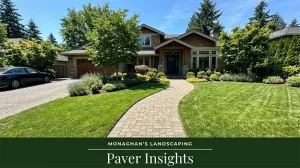
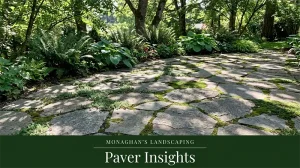

Why Portland Homeowners Choose Monaghan’s Landscaping
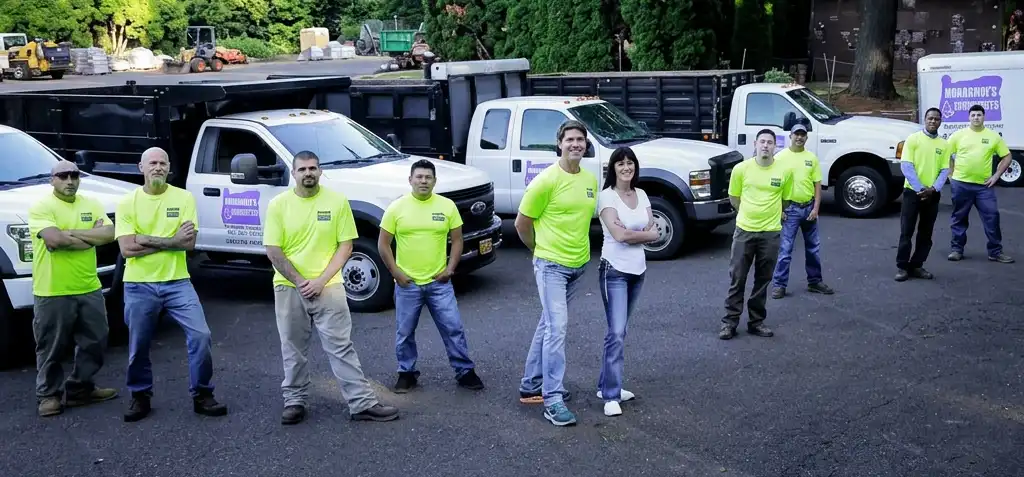
A landscaping project is one of the biggest investments you'll make in your property. That's why every Monaghan's project starts with a free on-site consultation and a written proposal with line-item pricing, material specs, and a clear timeline. No verbal ballparks. No vague estimates. No surprises.
38+
years in Portland
285+
five-star reviews
A+
BBB rating
3 yr
workmanship warranty
Licensed, bonded, insured — Oregon LCB# 7419 👈 click to verify
Line-item written estimates — on-site consultation, full scope before work begins
5-star commitment — we won't leave until we've earned your 5-star review, see our live Google reviews
Eco-friendly equipment — electric at 65-70 dB, quieter than conversation, no nasty exhaust fumes
65 dB
our equipment
85 dB
gas equipment
Your Neighbors Will Notice the Difference
We're committed to using clean, renewable energy. All-electric mowers, trimmers, and blowers running at 65-70 dB, roughly the volume of a normal conversation. Most landscaping crews show up with gas equipment at 85+ decibels with exhaust fumes drifting into open windows. We don't think that's acceptable anymore. No fumes. No noise complaints. Just the work getting done.
"The crew showed up on time and cleaned the site at the end of each day, and they were all incredibly talented and friendly. The final outcome exceeds expectations. The project was to remove marshy grass, put in drainage, then install architectural slabs with Mexican pebbles, topped off with low voltage lighting which is amazing."
Heather Gordon
Oregon City, Oregon
Landscaping Contractor Services In Portland, OR
Retaining Wall Installation
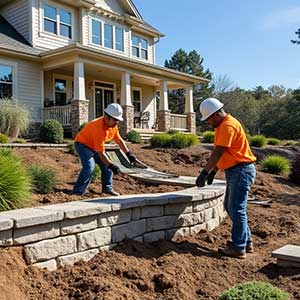
Retaining walls and pavers are one of our most common project pairings. A retaining wall creates the level ground that a patio or walkway needs, and building both at the same time lets us coordinate foundations, drainage, and transitions between the wall face and the paver surface. We build concrete block, natural stone, and boulder retaining walls designed for Portland’s clay soil and wet climate.
New Sod Lawn Installation
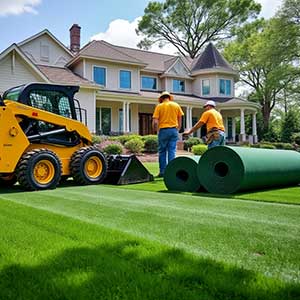
A new paver patio looks best when the surrounding lawn is in good shape. If your existing grass is thin, muddy, or worn out, installing fresh sod alongside your paver project gives the entire yard a finished look. We install perennial ryegrass and fine fescue blends from local Willamette Valley growers and can coordinate sod delivery with your paver installation so the lawn goes down as soon as the hardscape is complete.
Sprinkler System Installation
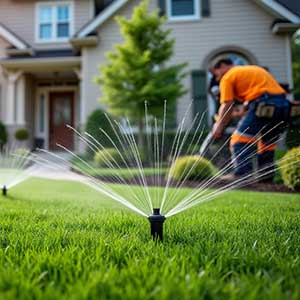
If you’re adding a patio or walkway, your irrigation system may need adjustments. We run pipe sleeves under pavers during construction so sprinkler lines can cross without cutting through finished surfaces later. If you need a new irrigation system or want to rezone an existing one around new hardscape, we can design and install both as a single coordinated project.
Artificial Turf Installation
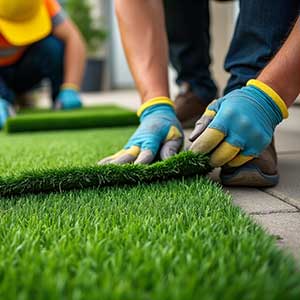
Artificial turf and pavers pair well in Portland yards where natural grass struggles. A paver patio for entertaining, surrounded by turf for a clean, mud-free yard, gives you the best of both with virtually no maintenance. The two systems share similar base preparation requirements, which means building both at once is more efficient than doing them separately.
Paver Installation
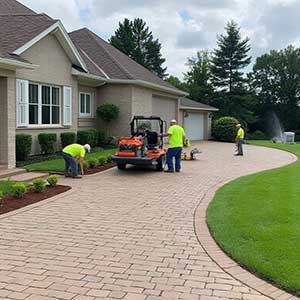
You’re already here! Whether you’re building a backyard patio, replacing an aging concrete walkway, adding a driveway, or creating an outdoor living space, our paver installations start with a properly excavated and compacted aggregate base designed for Portland’s clay soil and seasonal freeze-thaw cycles. Concrete, brick, natural stone, and permeable options are available.
Drainage Solutions
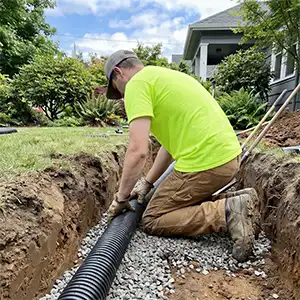
Water pooling against patios, walkways, and driveways is one of the most common drainage problems we fix. We install catch basins, channel drains, and French drains alongside paver projects so surface water routes away from your hardscape instead of collecting at the edges.
Areas We Serve
Don't see your area? Give us a call, we probably serve your area too! Call (503) 847-9110
Ready To Talk About Your Project?
Or Fill Out The Form Below
⬇
Submit this form
We call within one business day
You get a detailed estimate with line-item pricing, material specs, and a 3-year warranty
Most consultations are booked within a few days of your request.